Hair Transplant Costs and Reviews: Comprehensive Guide to Affordable Options
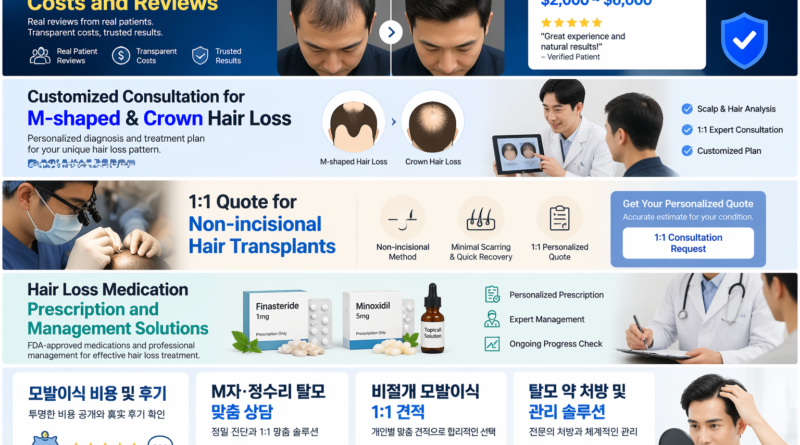
Hair loss is a common issue that affects many people, especially as they age. Whether due to genetics, hormonal changes, or environmental factors, hair loss can have a significant impact on a person’s confidence and self-esteem. One of the most effective solutions for hair restoration is a hair transplant. However, one of the most common concerns people have before opting for a hair transplant is the cost. In this comprehensive guide, we’ll discuss everything you need to know about hair transplant costs, reviews, and affordable options, as well as offer a detailed look into the process of hair restoration, including customized consultations for M-shaped and crown hair loss, non-incisional hair transplant options or 모발이식 비용 및 후기, and hair loss medication prescription and management solutions.
Understanding Hair Transplants
A hair transplant is a surgical procedure that involves transferring hair follicles from one part of the scalp (typically the back or sides) to a balding or thinning area. The goal is to restore hair to areas where it has been lost, improving both the appearance and density of the hair. There are two main techniques used in hair transplants: Follicular Unit Transplantation (FUT) and Follicular Unit Extraction (FUE). Both methods have their advantages, and the choice between them typically depends on the individual’s needs, hair loss pattern, and the clinic’s offerings.
Hair Transplant Costs: What You Need to Know
The cost of a hair transplant can vary widely depending on several factors, including the clinic’s location, the type of procedure, and the number of grafts required. On average, hair transplant costs can range from $3,000 to $15,000 or more. However, it’s important to understand that this price may not always include additional fees, such as consultations, post-surgery medications, and follow-up treatments.
One of the biggest factors that influence the cost of a hair transplant is the number of grafts needed. A single hair transplant graft contains 1 to 4 hairs, and the more grafts required to cover the thinning or bald areas, the higher the cost. For example, if you only need a small area treated, such as a receding hairline, the cost may be on the lower end of the spectrum. However, if you need a larger area, such as the crown or entire scalp, the cost will naturally increase.
It’s also important to factor in the reputation and experience of the clinic. Clinics with more experience, better equipment, and highly trained surgeons may charge more for their services. However, you should also consider the potential risks of choosing a cheaper option, as low-cost clinics may compromise on the quality of their services, leading to unsatisfactory results.
Customized Consultation for M-shaped & Crown Hair Loss
Hair loss can occur in various patterns, with the most common being receding hairlines (often referred to as M-shaped hair loss) and thinning at the crown of the head. These two types of hair loss require different treatment approaches and a customized consultation is crucial to determining the most suitable solution for each individual.
M-shaped hair loss typically begins at the temples and moves backward, resulting in a hairline that resembles the letter “M.” This type of hair loss is often seen in both men and women, and it is a common concern for those seeking hair restoration. During a consultation, the specialist will assess the severity of the hair loss, your hair type, and your expectations to provide a personalized treatment plan. In many cases, a hair transplant may be the best option to restore the hairline and improve facial aesthetics.
Crown hair loss, on the other hand, occurs at the top of the head, leading to a bald spot or thinning in the crown area. This type of hair loss is also commonly treated with hair transplant procedures, with the goal of redistributing hair follicles from the donor area to the thinning or balding crown. A consultation for crown hair loss may include a detailed analysis of your hair’s density and growth pattern, allowing the surgeon to create a customized plan for restoring hair to the crown area.
Both M-shaped and crown hair loss require careful planning and a detailed understanding of the patient’s needs. Clinics offering personalized consultations take the time to understand the unique characteristics of each patient’s hair loss, ensuring that the treatment plan is tailored to deliver the best possible results.
Non-incisional Hair Transplants: What Are They and Why Are They Popular?
Non-incisional hair transplants are a revolutionary method that has gained popularity due to their minimally invasive nature. Unlike traditional hair transplants, which involve making incisions to harvest and transplant hair follicles, non-incisional hair transplants use a more refined technique that minimizes scarring and reduces recovery time.
One of the most common non-incisional methods is Follicular Unit Extraction (FUE). In FUE, individual hair follicles are extracted from the donor area using a tiny circular punch tool, without the need for large incisions. These follicles are then transplanted to the recipient area, where they will begin to grow new hair. Because FUE does not require large incisions, there is less scarring and a quicker recovery time, making it an ideal option for many patients.
Another key advantage of non-incisional hair transplants is the precision with which the hair follicles can be transplanted. The procedure allows the surgeon to place the follicles in a natural growth pattern, ensuring that the results look as realistic as possible. This makes FUE an excellent option for patients with smaller areas of hair loss or those who want a more discreet hair restoration procedure.
While non-incisional hair transplants are typically more expensive than traditional methods, they are still considered an affordable and effective option for many people looking to restore their hair. The cost of non-incisional hair transplants can vary, but on average, they are a great option for patients seeking a high-quality procedure with minimal downtime.
Hair Loss Medication Prescription and Management Solutions
In addition to surgical hair restoration, hair loss medications and management solutions play a crucial role in the overall treatment of hair loss. These treatments are often used in combination with hair transplants to help maintain and strengthen existing hair, as well as promote hair growth in thinning areas.
There are two primary medications approved by the FDA for treating hair loss: Finasteride and Minoxidil. Finasteride is an oral medication that helps prevent hair loss by blocking the production of DHT, a hormone responsible for hair follicle shrinkage. Minoxidil, on the other hand, is a topical solution that promotes hair growth by increasing blood flow to the scalp and stimulating hair follicles. Both of these medications are often prescribed as part of a comprehensive hair loss management plan.
In addition to prescription medications, many clinics offer additional hair loss management solutions, such as platelet-rich plasma (PRP) therapy. PRP therapy involves drawing a small amount of the patient’s blood, processing it to concentrate the platelets, and then injecting it into the scalp to promote hair growth. This treatment can help stimulate dormant hair follicles and improve hair density.
Other non-prescription solutions, such as shampoos, conditioners, and scalp treatments, can also be beneficial in maintaining hair health and preventing further hair loss. These products are often used as part of a holistic approach to hair loss management, providing additional support to the scalp and hair follicles.
Hair Transplant Costs and Reviews: What Patients Are Saying
When it comes to hair transplant procedures, patient reviews and testimonials are invaluable resources for prospective patients. Hearing about the experiences of others who have undergone similar treatments can provide insight into what to expect from the procedure, recovery, and results.
Many patients who have undergone hair transplant procedures, especially non-incisional methods like FUE, report positive results, citing improved hair density and natural-looking hairlines. Reviews often highlight the professionalism of the medical staff, the quality of the facilities, and the overall satisfaction with the results. However, as with any medical procedure, it’s important to read a variety of reviews to get a balanced perspective.
Patients who have opted for hair transplant procedures are often impressed by the minimal discomfort and fast recovery times associated with modern techniques. Non-incisional hair transplants, in particular, are praised for their ability to provide natural results with little to no scarring. Many patients are also happy with the level of care and support they receive during the consultation, procedure, and recovery stages.
As for costs, reviews often mention that while hair transplants can be expensive, the results are worth the investment. Some patients have found that financing options or payment plans make the procedure more affordable, allowing them to get the treatment they need without breaking the bank.
For those interested in learning more about hair transplant options, costs, and reviews, it’s always a good idea to explore reputable clinics, such as those available at https://www.hair.optislab.io/, where you can find detailed information and expert advice to guide you through your hair restoration journey.
Conclusion
Hair transplants are an excellent solution for those suffering from hair loss or M자·정수리 탈모 맞춤 상담, offering long-term results that can significantly improve a person’s appearance and self-confidence. The cost of hair transplants can vary, but understanding the factors that influence pricing can help you make an informed decision. Additionally, seeking a customized consultation for specific hair loss patterns, such as M-shaped or crown hair loss, and exploring non-incisional hair transplant options can ensure you receive the best treatment for your needs. Pairing hair transplant procedures with effective medication and management solutions can help maintain and enhance the results, offering a comprehensive approach to hair restoration.