Stamped Concrete: The Complete Guide to Durable, Stylish, and Cost-Effective Decorative Surfaces
Stamped concrete has become one of the most popular choices for homeowners and commercial property owners who want the elegant appearance of natural stone, brick, slate, or wood without paying premium material costs. Combining durability with impressive design flexibility, stamped concrete can transform patios, driveways, walkways, pool decks, and outdoor living spaces into attractive features that increase both curb appeal and property value.
Whether you are planning a new construction project or renovating an existing outdoor area, understanding how stamped concrete works can help you make an informed decision. This guide covers everything from the installation process to benefits, maintenance, costs, and design options. For Lynchburg stamped concrete contact Premier Concrete.
What Is Stamped Concrete?
Stamped concrete is poured concrete that is textured, patterned, or embossed to imitate the appearance of other building materials. Special stamping mats are pressed into freshly poured concrete before it fully hardens, creating realistic patterns that resemble natural stone, cobblestone, brick, tile, wood planks, or even custom artistic designs.
To enhance its appearance, contractors often add integral color, color hardeners, stains, and sealers. These finishing techniques create depth, texture, and realistic variations that closely mimic natural materials.
The result is a decorative surface that offers beauty, strength, and affordability.
Benefits of Stamped Concrete
1. Attractive Appearance
One of the biggest reasons homeowners choose stamped concrete is its visual appeal. Modern stamping techniques create surfaces that closely resemble expensive paving materials while maintaining the structural integrity of concrete.
Popular decorative styles include:
- Ashlar slate
- Flagstone
- Brick
- European fan
- Cobblestone
- Wood plank
- Travertine
- Random stone patterns
These designs can complement both traditional and contemporary architecture.
2. Cost-Effective Alternative
Natural stone, brick, and pavers often require higher material and labor costs. Stamped concrete offers a similar aesthetic at a more affordable price.
Because the entire surface is poured as one continuous slab, installation usually takes less time than individually placing stones or pavers.
3. Long-Lasting Durability
Concrete is known for its strength and longevity. When installed correctly and properly maintained, stamped concrete can last for decades while handling heavy foot traffic and vehicle loads.
Its durability makes it suitable for:
- Driveways
- Sidewalks
- Patios
- Pool decks
- Courtyards
- Commercial entrances
4. Low Maintenance
Compared to natural stone or pavers that may shift or allow weeds to grow between joints, stamped concrete requires relatively little maintenance.
Routine care generally includes:
- Sweeping debris
- Washing with mild detergent
- Resealing every few years
- Repairing occasional cracks if necessary
This simplicity saves both time and maintenance costs.
5. Wide Range of Colors
Stamped concrete can be customized with numerous colors to match landscaping, home exteriors, or architectural themes.
Popular color options include:
- Sandstone
- Charcoal
- Walnut
- Terra cotta
- Slate gray
- Desert tan
- Mocha
- Antique brown
Accent colors and release agents can also create realistic highlights and shadows.
Common Applications
Stamped concrete works well in many residential and commercial settings.
Driveways
A decorative driveway creates a strong first impression while providing the durability needed for daily vehicle traffic.
Patios
Outdoor entertainment spaces benefit from attractive textures that resemble natural stone without the high installation costs.
Pool Decks
Stamped concrete provides a decorative, continuous surface around swimming pools. Special finishes can also improve slip resistance.
Walkways
Garden paths and front entry walkways gain elegance through brick or stone-inspired patterns.
Outdoor Kitchens
Decorative concrete complements grills, seating areas, and fire pits while resisting weather exposure.
Commercial Properties
Restaurants, hotels, shopping centers, and office buildings often use stamped concrete to enhance outdoor gathering spaces.
The Installation Process
Professional installation is essential for achieving long-lasting results.
Step 1: Site Preparation
The installation area is excavated and graded to create a stable foundation.
Step 2: Formwork
Forms are installed to define the shape and dimensions of the concrete.
Step 3: Reinforcement
Steel reinforcement or wire mesh may be added to increase structural strength.
Step 4: Pouring Concrete
Fresh concrete is poured evenly across the prepared surface.
Step 5: Coloring
Integral pigments or color hardeners are applied to create the desired base color.
Step 6: Stamping
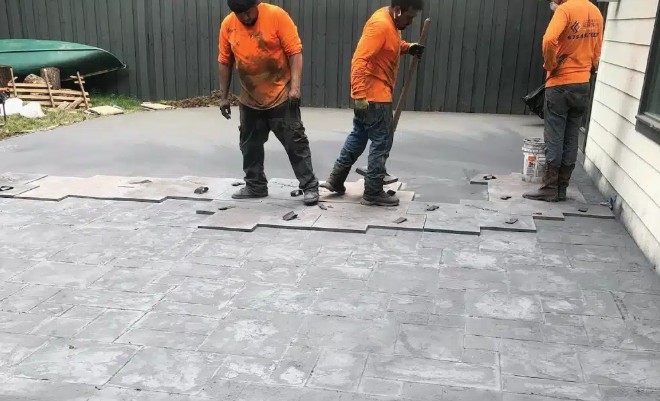
Before the concrete fully cures, specialized rubber stamps are pressed into the surface to create decorative patterns.
Step 7: Curing
The concrete is allowed to cure properly to maximize strength and durability.
Step 8: Sealing
A protective sealer enhances color while protecting against moisture, stains, and UV damage.
Design Options
One of stamped concrete’s greatest strengths is its nearly unlimited customization possibilities.
Pattern Choices
Popular patterns include:
- Brick borders
- Running bond
- Basket weave
- Ashlar slate
- Seamless stone
- Random flagstone
- Wood grain
Decorative Borders
Contrasting borders can frame patios or driveways, adding sophistication and visual interest.
Multiple Colors
Combining several shades creates a more natural appearance, especially when imitating stone or slate.
Custom Logos
Commercial properties sometimes incorporate logos or decorative medallions directly into stamped concrete surfaces.
Maintenance Tips
Proper maintenance helps preserve stamped concrete’s appearance and extends its lifespan.
Recommended maintenance includes:
- Sweep regularly
- Wash periodically using mild soap
- Remove oil or grease promptly
- Avoid harsh chemical cleaners
- Reseal every 2–4 years
- Use plastic shovels instead of metal for snow removal
Regular sealing also helps prevent fading and surface wear.
Potential Drawbacks
While stamped concrete offers many advantages, it’s important to understand a few limitations.
Cracking
Like all concrete, stamped concrete may develop small cracks over time due to ground movement or temperature changes.
Professional installation with proper control joints helps minimize cracking.
Slippery Surface
Glossy sealers can become slippery when wet, particularly around pools.
Adding anti-slip additives during sealing improves traction.
Repairs
Although repairs are possible, matching existing colors and patterns perfectly can sometimes be challenging.
Cost Considerations
Several factors influence stamped concrete pricing, including:
- Project size
- Pattern complexity
- Color combinations
- Site preparation
- Geographic location
- Labor rates
- Decorative borders
- Surface sealing
While initial costs may exceed plain concrete, stamped concrete generally remains less expensive than installing natural stone or premium pavers.
Choosing the Right Contractor
The quality of installation significantly impacts long-term performance.
When hiring a contractor, consider:
- Years of experience
- Portfolio of completed projects
- Customer reviews
- Proper licensing and insurance
- Written estimates
- Warranty information
- Knowledge of decorative concrete techniques
Viewing completed installations can provide confidence in a contractor’s craftsmanship.
Is Stamped Concrete Worth It?
For many homeowners, stamped concrete offers an excellent balance between beauty, performance, and affordability. It provides the upscale appearance of natural materials while requiring less maintenance and often costing significantly less than stone or paver installations.
Its versatility allows virtually any outdoor space to become a visually appealing extension of the home. With countless colors, textures, and patterns available, stamped concrete can complement nearly any architectural style.
Conclusion
Stamped concrete is an outstanding decorative paving solution that combines durability, versatility, and cost-effectiveness. From elegant patios and welcoming walkways to durable driveways and commercial plazas, it offers the appearance of premium materials without their higher installation and maintenance costs.
When installed by experienced professionals and maintained with periodic cleaning and sealing, stamped concrete can provide decades of reliable performance while enhancing the beauty and value of a property. Whether you’re designing a new outdoor living area or upgrading an existing surface, stamped concrete remains one of the most practical and visually impressive choices available today.