Dog Grooming: A Complete Guide to Keeping Your Dog Healthy, Clean, and Happy
Dog grooming is an essential part of responsible pet care. While many people think grooming is mainly about making a dog look clean and attractive, it also plays an important role in maintaining overall health and comfort. Regular grooming helps keep a dog’s skin and coat healthy, reduces shedding, prevents painful matting, and allows owners to identify potential health problems early. Looking for dog groomers Greensboro, contact Vickie’s Pampered Pet.
Whether you own a small short-haired dog or a large breed with a long, thick coat, establishing a regular grooming routine can improve your dog’s quality of life. Professional dog grooming services can be helpful, but many basic grooming tasks can also be performed at home with the right tools and techniques.
What Is Dog Grooming?
Dog grooming refers to the regular care and maintenance of a dog’s coat, skin, nails, ears, teeth, and general appearance. A complete grooming routine may include:
- Brushing and combing the coat
- Bathing and drying
- Trimming or clipping the fur
- Nail trimming
- Ear cleaning
- Dental care
- Checking the skin for abnormalities
- Cleaning around the eyes and paws
The exact grooming needs of a dog depend on several factors, including breed, coat type, age, lifestyle, and overall health.
For example, a short-haired dog may only need occasional brushing, while a long-haired breed may require frequent brushing and professional trimming to prevent tangles and mats.
Why Is Regular Dog Grooming Important?
Regular grooming provides benefits that go far beyond appearance. One of the most important advantages is maintaining healthy skin and fur.
Brushing removes loose hair, dirt, and debris from the coat. It can also help distribute natural oils throughout the fur, keeping the coat looking healthier and smoother. Regular brushing is particularly important for dogs with long, curly, or thick coats because these coat types can easily become tangled.
Matted fur can be uncomfortable and even painful. Severe mats may pull on the skin and trap moisture, dirt, and bacteria. In some cases, matting can contribute to skin irritation or infection.
Grooming also gives pet owners an opportunity to inspect their dog closely. During a grooming session, you may notice changes such as:
- Dry or irritated skin
- Unusual lumps or bumps
- Fleas or ticks
- Cuts or scratches
- Ear problems
- Changes in coat condition
- Overgrown nails
Finding these issues early can help owners seek appropriate veterinary advice when necessary.
Brushing Your Dog’s Coat
Brushing is one of the most important parts of dog grooming. The frequency depends largely on your dog’s coat type.
Dogs with short coats may only need brushing once or twice a week. Dogs with medium or long hair may need grooming several times per week, while some breeds require daily brushing.
Different grooming tools are designed for different coat types. Common options include slicker brushes, bristle brushes, undercoat rakes, grooming gloves, and wide-tooth combs.
When brushing your dog, work gently and avoid pulling aggressively on tangled fur. Start with small sections and carefully remove knots. If a mat is severe, attempting to cut it out with household scissors can be risky because the skin may be pulled tightly into the mat. A professional groomer or veterinarian may be the safer option.
Regular brushing can also reduce the amount of loose hair around your home, making it especially useful during seasonal shedding periods.
Bathing Your Dog Properly
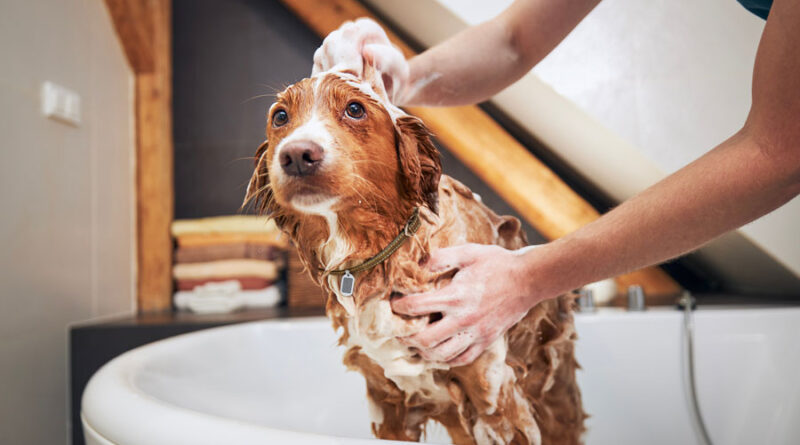
Bathing helps remove dirt, odors, and buildup from your dog’s skin and coat. However, bathing too frequently may remove natural oils and contribute to dry or irritated skin.
The ideal bathing schedule depends on the individual dog. An active dog that spends a lot of time outdoors may need more frequent baths than a dog that primarily stays indoors.
Always use a shampoo specifically designed for dogs. Human shampoos may not be suitable for a dog’s skin and can cause irritation.
Before bathing, brush your dog’s coat to remove loose fur and tangles. Use lukewarm water and make sure the water is comfortable rather than too hot or too cold.
Avoid getting shampoo directly into the dog’s eyes, ears, or mouth. After washing, rinse thoroughly because leftover shampoo can irritate the skin.
Once the bath is complete, dry your dog with a clean towel. Some dogs may tolerate a pet-safe dryer, while others may feel more comfortable air drying in a warm environment.
Nail Trimming and Paw Care
Overgrown nails can cause discomfort and affect the way a dog walks. If nails become too long, they may put pressure on the paws or become more likely to break.
Regular nail trimming is therefore an important part of dog grooming.
Many dog owners feel nervous about trimming nails because cutting too deeply can cause pain and bleeding. If you are inexperienced, ask a professional groomer or veterinarian to demonstrate the proper technique.
In addition to nail care, inspect your dog’s paws regularly. Check for dirt, small stones, cuts, cracked pads, or objects stuck between the toes.
Keeping the fur around the paws properly maintained can also help some long-haired dogs stay cleaner and more comfortable.
Ear and Dental Care
A complete dog grooming routine should not focus only on the coat. Ear and dental care are equally important.
Check your dog’s ears regularly for unusual odors, excessive wax, redness, or discharge. Some dogs are more prone to ear problems, particularly breeds with floppy ears or heavy hair around the ear area.
Use only appropriate products recommended for canine ear cleaning. Avoid inserting objects deeply into the ear canal.
Dental hygiene is another important aspect of overall pet care. Regular tooth brushing with dog-safe toothpaste can help maintain cleaner teeth and fresher breath. Never use human toothpaste unless specifically advised by a veterinary professional.
Dental chews and other pet dental products may also support oral hygiene, but they should not automatically replace regular dental care.
Professional Dog Grooming Services
While many grooming tasks can be performed at home, professional dog groomers offer valuable services, especially for dogs with difficult or high-maintenance coats.
A professional dog grooming appointment may include:
- Full bathing and drying
- Coat brushing and de-shedding
- Hair trimming or styling
- Nail trimming
- Ear cleaning
- Paw maintenance
- Sanitary trimming
Professional groomers also have specialized equipment and experience handling different breeds and coat types.
For example, breeds with continuously growing hair may require regular professional trimming to keep their coats manageable. Dogs with thick double coats may benefit from professional de-shedding services during periods of heavy shedding.
When choosing a dog grooming service, look for a clean environment, experienced staff, appropriate handling practices, and clear communication about the services being provided.
How to Make Grooming Less Stressful
Some dogs enjoy grooming, while others may become nervous or uncomfortable. The best approach is to introduce grooming gradually.
Start with short sessions and allow your dog to become familiar with brushes, clippers, nail trimmers, and other tools. Use positive reinforcement such as praise, gentle encouragement, or appropriate treats.
Avoid forcing a frightened or highly stressed dog through a long grooming session. Instead, break the process into smaller steps.
For example, you might spend one day brushing the coat and another day working on nail care. Over time, your dog may become more comfortable with the grooming routine.
Consistency is important. Dogs that are groomed regularly often become more familiar with the process than dogs that only receive grooming when their coats become severely tangled or dirty.
Creating a Dog Grooming Routine
A simple grooming schedule can make pet care easier. Your routine may look something like this:
Daily or several times per week: Check the coat, remove loose fur, and brush as needed.
Weekly: Inspect the ears, paws, skin, and teeth.
Every few weeks: Trim the nails if necessary.
As needed: Bathe your dog when dirty or according to their individual grooming requirements.
Regularly: Schedule professional grooming appointments for dogs that require coat trimming or specialized care.
The best routine will depend on your dog’s specific needs. A puppy, senior dog, long-haired breed, or highly active outdoor dog may require a different grooming schedule.
Final Thoughts
Dog grooming is an important part of keeping your pet healthy, comfortable, and looking their best. Regular brushing, bathing, nail trimming, ear care, and dental hygiene can help prevent common problems and provide opportunities to notice changes in your dog’s condition.
A consistent grooming routine also strengthens the bond between you and your pet. By making grooming a calm and positive experience, you can help your dog become more comfortable with regular handling and care.
Whether you choose to groom your dog at home or use a professional dog grooming service, the key is consistency and attention to your dog’s individual needs. With proper care, the right grooming tools, and a routine suited to your dog’s coat and lifestyle, you can help keep your four-legged companion clean, healthy, and happy for years to come.